When Expectations Outrun AI
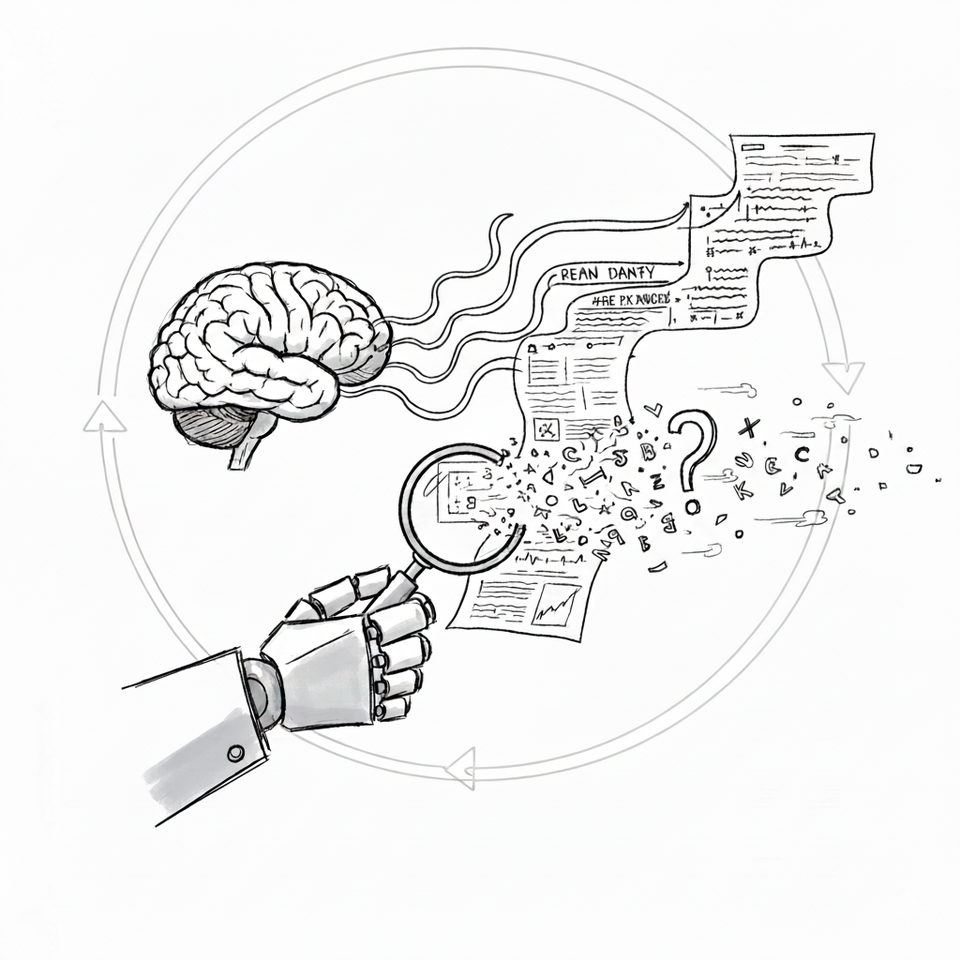
You know LLMs are not human. Everyone knows this. Yet when we talk or build with an LLM, our brain easily slips.
Not because we are careless. Because of how human cognition works.
You ask for a plan. The language is articulate, well-structured. It lays out milestones, dependencies, risk mitigation. Sounds like someone thinking through the problem. Your brain registers: intelligence.
For all of human history, this inference was reliable. Language mastery meant human intelligence. If something spoke with such articulation and structure about complex topics - it understood them - with all the cognitive machinery behind it. Language and understanding were inseparable.
Then we built machines that master language.
They speak about anything articulately. Sound thoughtful, knowledgeable, wise. Every conversational cue that usually signals human-like intelligence is present.
Then you return tomorrow. The plan is gone. Not refined, not remembered, not built upon. Gone. The conversation starts from zero.
This happens constantly. Eloquence and reasoning with no follow-through. Perfect plans that vanish.
Sometimes: perfect explanations are followed by obvious misses or confident fabrications wrapped as facts (hallucinations).
Each time, there is a moment of cognitive dissonance. Wait, if you understood that, why did you not...?
You are surprised. Why?
Here is the trap: you cannot turn off your inference.
When something speaks fluently about complex topics, your brain does what it evolved to do. It infers intelligence with the whole cognitive architecture behind it - understanding, continuity, goals, grounding - everything human intelligence includes.
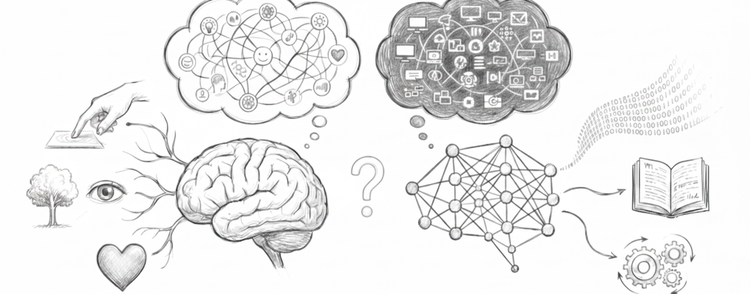
LLM intelligence is real. But the architecture behind it is fundamentally different. We keep expecting the human-like package because sophisticated language makes it sound human.
Why Engineering Never Stops
Models get better. Each version more capable - better articulation, more knowledge, better reasoning, better synthesis...
Better capability creates stronger expectations.
If it discusses strategy this well, surely it can maintain direction. If it explains debugging this clearly, surely it can catch bugs. If it reasons about goals, surely it can pursue them.
The hype amplifies this. Marketing promises superhuman intelligence. Demos show impressive capability.
Better capability + stronger hype → even stronger expectations.
As a result, many rush to apply LLMs everywhere - customer support, code generation, clinical triage, strategy planning...
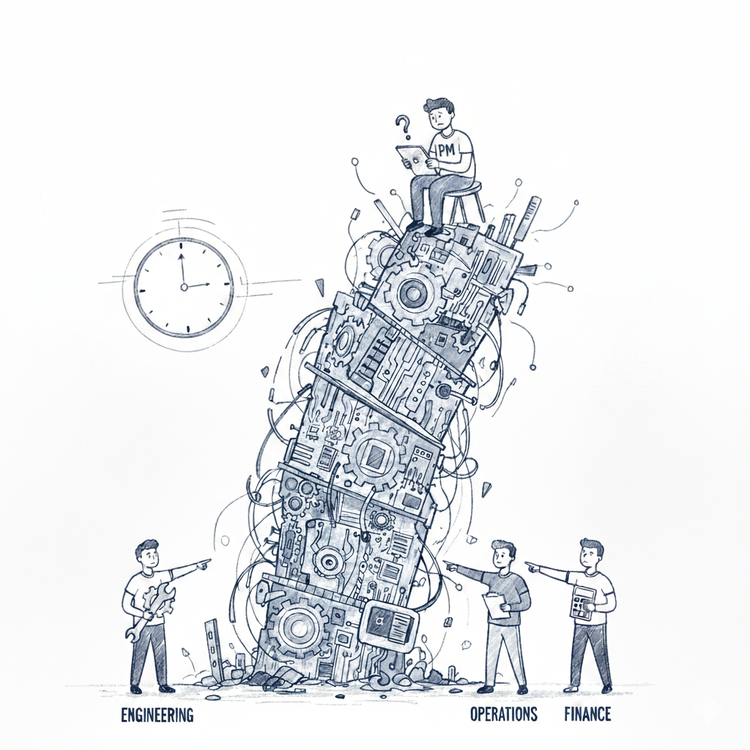
Then reality. The customer support agent cannot track context across conversations. The code generator cannot maintain coherence across a codebase. The strategic advisor cannot remember what mattered yesterday.
The intelligence is there. The architecture has constraints.
So we engineer.
First, compensating for architectural constraints - prompt engineering, context management, RAG systems, output validation, retraining pipelines...
Second, compensating for overapplication - human-in-the-loop, safety guardrails, fallback mechanisms, audit and compliance, cost controls...
With enough engineering, the gaps are bridged. But look at what it took. Two separate engineering efforts, both massive.
This is the paradox. Better models should reduce engineering - not increase it.
The cycle becomes clear:
Better models + stronger hype → stronger expectations → wider application → more places where architectural constraints matter → more engineering to compensate.
The Architecture
LLMs learn from massive datasets - trillions of tokens from text across the internet. They build internal representations, abstract models compressed from all that data.
But here is what matters: these representations are frozen after training, any adaptation happens only within the context window, are learned from descriptions rather than lived experience, and the model maintains no goals beyond the immediate response.
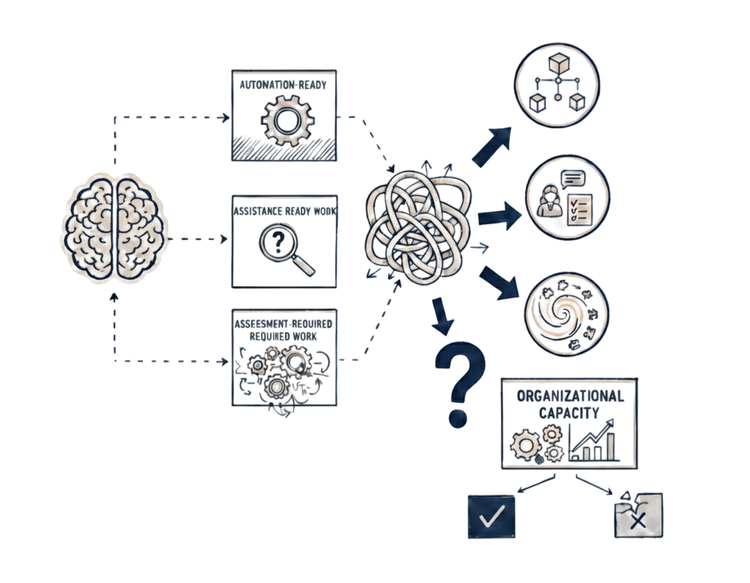
Four architectural constraints hidden by fluent language.
Frozen After Training
Training ends. What the model learned freezes at that moment.
Deployment means: apply this frozen knowledge and understanding - without learning to correct or expand it.
Compare: biological intelligence learns continuously. Every interaction refines its knowledge and behavior.
LLMs are intelligence frozen in exploitation. They apply what they learned during training and adapt within a conversation - but only while it stays in context. The moment the conversation ends, the model reverts to its frozen state. When the world drifts, when edge cases accumulate, when patterns change - humans must intervene.
This creates perpetual engineering: RAG systems, drift monitoring, data collection, retraining pipelines...
No Memory
Everything an LLM knows about your conversation exists in its context window. Outside that window: nothing persists. No memory across conversations.
Compare: humans remember. Talk to someone today, talk to them next week - you both know where you left off, what mattered, what you decided. The context persists.
LLMs demonstrate intelligence within each conversation. But nothing consolidates across conversations. Everything must fit into immediate working memory.
This creates perpetual engineering: memory systems, context management, conversation history consolidation, caching mechanisms...
No Persistent Goals
An LLM processes your request. Generates a response. Then stops.
No goal persists beyond that moment. No intention to follow through. No drive to check back, refine, or build on what it started.
Compare: humans maintain goals across time. Decide to learn Spanish - that intention persists, shapes decisions, drives follow-through without external prompting.
LLMs respond intelligently to goals but never pursue them autonomously. Load yesterday's plan into context and the LLM will discuss it, extend it, revise it - but only because you brought it back.
This creates perpetual engineering: workflow orchestration, state management systems, schedulers, progress tracking...
No Practical Experience
Read every book about swimming - technique, breathing, stroke mechanics. Now you can discuss swimming with perfect terminology, explain biomechanics, sound expert.
But ask how to handle fatigue in choppy water, when to adjust your stroke, what that odd shoulder feeling means - and the limitations show. You know about swimming.
Someone who learned by doing? They struggled, adjusted, felt the water. Their knowledge comes from consequence, not description.
Both are intelligent. Both have knowledge. Fundamentally different kinds.
LLMs operate in the first mode. Academic knowledge - rich representations learned from everything humans have written, not from doing. They know "about" everything.
This is why they discuss surgery with perfect terminology yet give impractical advice. Explain debugging eloquently yet miss obvious bugs. Sound wise yet lack common sense judgment.
And language obscures this constraint. When an LLM speaks with sophisticated terminology, your brain infers the practical grounding that usually comes with it.
That grounding is not there - because lived experience is missing.
This gap between academic and practical knowledge contributes to brittleness - small wording changes activate different representations, producing divergent outputs. No robust understanding to constrain responses.
The same gap drives much of the prompt engineering burden - humans generalize from sparse instructions. LLMs need explicit structure because their representations are shaped by language alone, not by lived experience.
And it is part of why hallucinations happen - responses that sound authoritative, confident, and detailed, but confidence comes from language, not verified experience.
This creates perpetual engineering: hallucination detection, output verification, human-in-the-loop, safety guardrails...
Overapplication
The architectural constraints are one thing. What we do despite knowing them is another.
Most business workflows are intentionally deterministic. They are designed to reduce variance, enforce consistent policy, and guarantee auditability. Predictability is not a limitation - it is the entire point.
Yet we inject "autonomous" LLM-driven decision-making into precisely these environments. Not because the workflows need autonomy, but because autonomy is what sells.
"AI replaces workers" sells better than "AI assists workers". So we attempt to substitute entire roles with systems that have no persistent goals, no ownership of outcomes, no accountability over time.
This creates a structural contradiction.
Autonomous operation requires systems that intrinsically: remember context between interactions, track outcomes as they unfold, learn from mistakes in real-time, own decisions over time...
LLM architecture was not designed for any of these. We are demanding autonomy from systems designed for something else entirely.
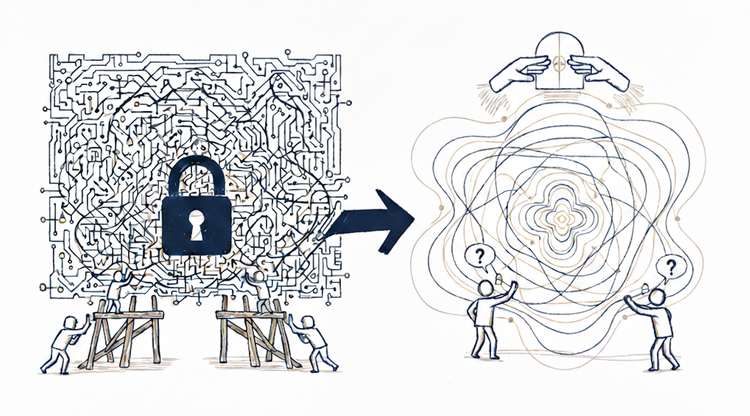
When this breaks - and it does - we do not rethink the approach. We add layers: safety guardrails, human-in-the-loop flows, orchestration systems, validation layers, fallback mechanisms...
With every added layer, the system becomes less autonomous and more deterministic again. We end up with the deterministic structure we started with, except now with an opaque, probabilistic component embedded inside. More complexity, less transparency, higher cost.
Overapplication is not about inadequate models. It is about placement.
The Choice
The fluency trap is automatic. We hear sophisticated language on complex topics and infer human intelligence.
This inference will keep happening. But we can stop using it as design guidance.
The architectural constraints are fixed - overapplication is a choice. We decide where LLMs belong - and where they do not.
The engineering will not stop until expectations align with architecture.
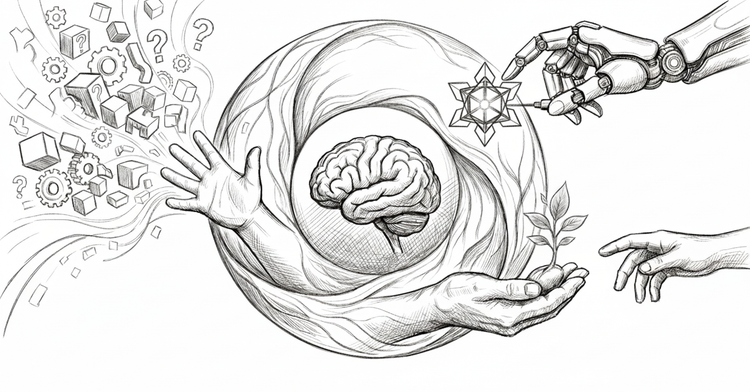
That alignment can happen two ways: wait for fundamentally different architecture, or design around what works today.