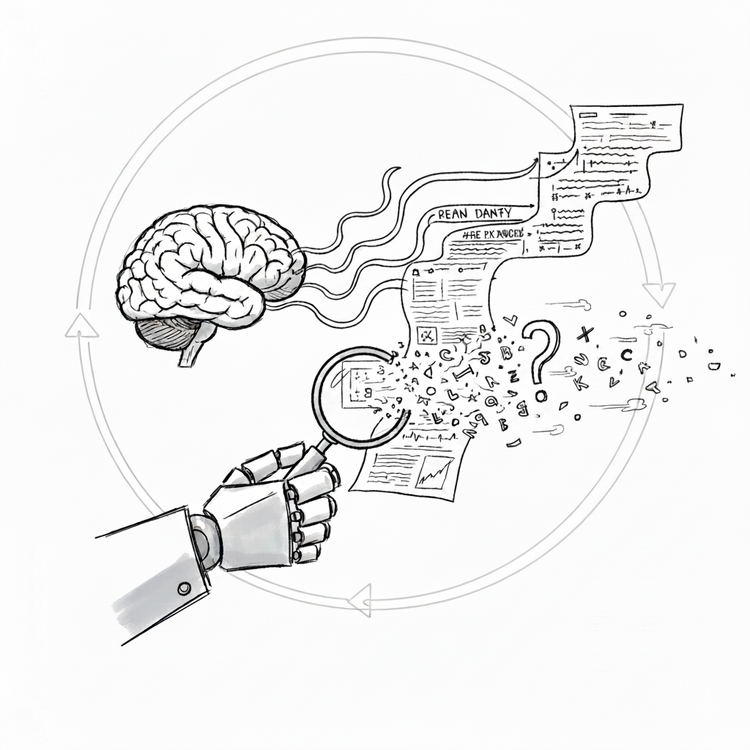
AI Capability Was the Breakthrough. Placement Is the Game.
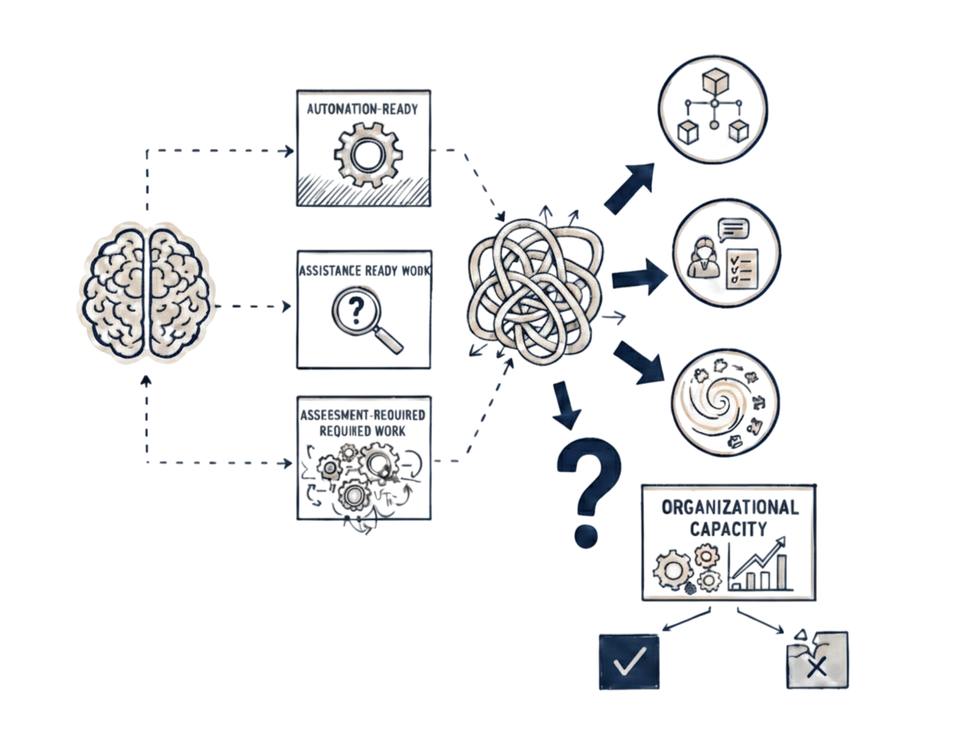
LLM demos impressed everyone. Context understanding. Great reasoning, planning, execution...The capability is real.
Then production. Same capability. Different outcome.
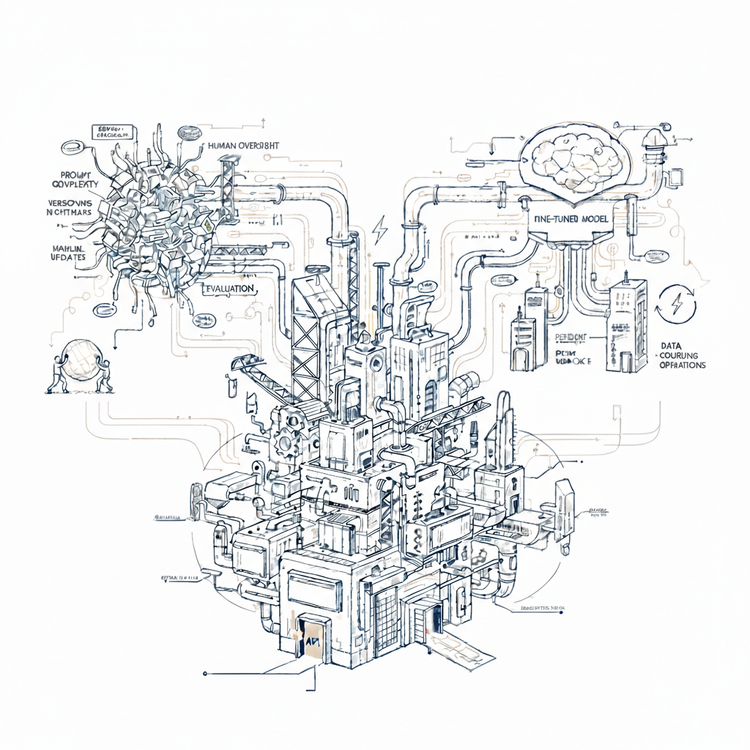
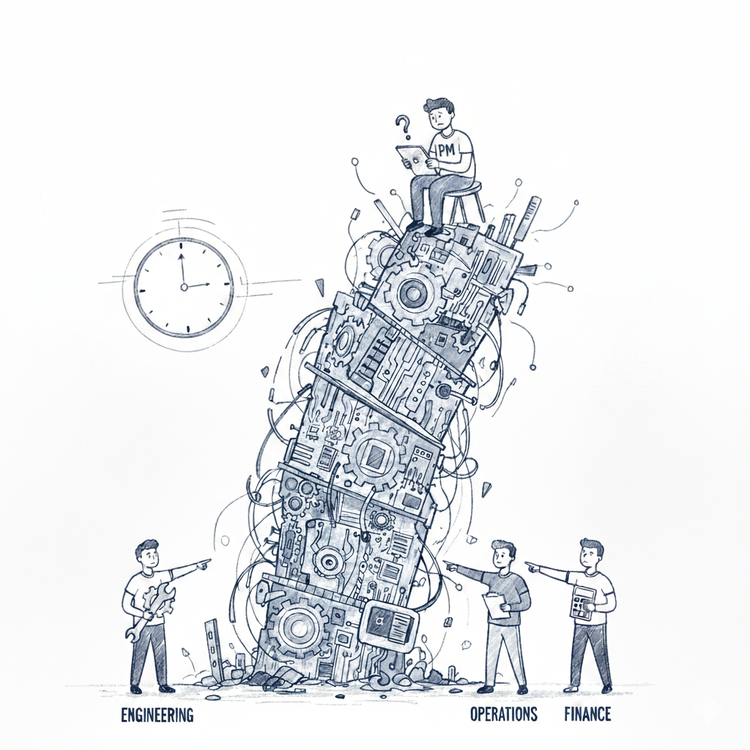
Perpetual engineering. Expanding operational burden. Costs that only increase. Infrastructure that grows more complex and expensive than the work it replaced.
The difference is predictable. Demos show capability. They reveal less about placement viability.
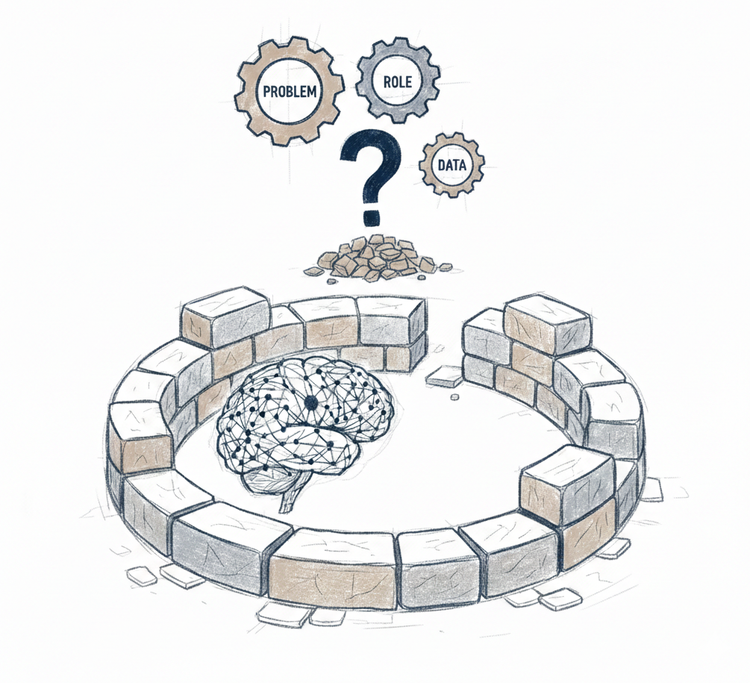
Many factors shape LLM placement decisions - cost, latency, data, regulations... All relevant. But they do not determine long-term viability.
What matters is whether the placement remains viable or its complexity and operational burden compound until they exceed the value it delivers, or make it too brittle to sustain. Get this wrong, and nothing else matters.
This framework reveals the structural forces that determine that outcome - before deployment.
See the Work, Choose the Approach
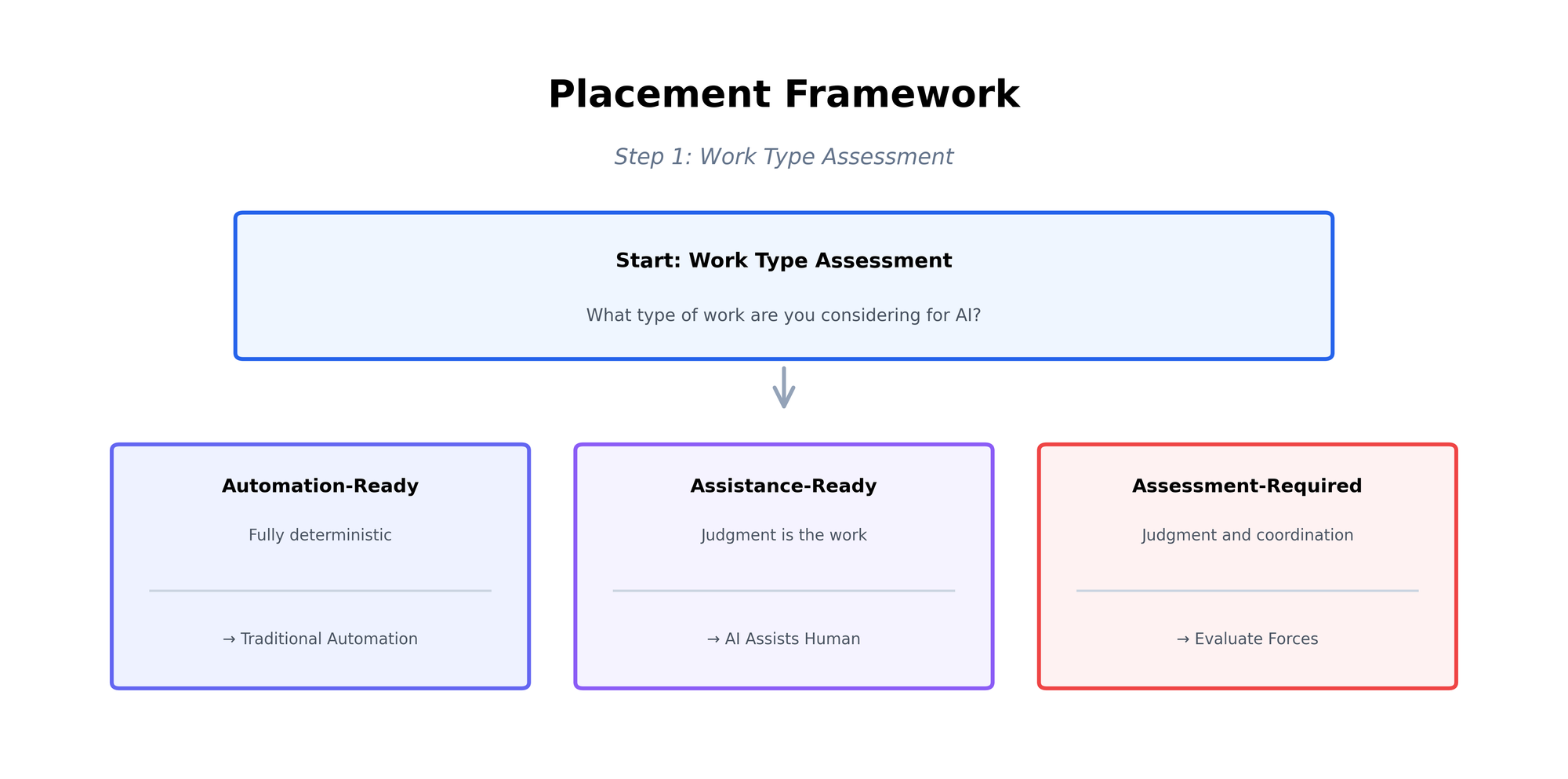
Three types of work exist when placing AI.
Automation-Ready Work where logic can be explicitly specified. Billing calculations, data validation, account provisioning. Any required judgment has been converted to deterministic rules.
Assistance-Ready Work where judgment is the work itself. Strategic resource allocation, approvals, crisis response. High-stakes decisions requiring consequence-grounded judgment, adaptation, and accountability - that must stay with humans.
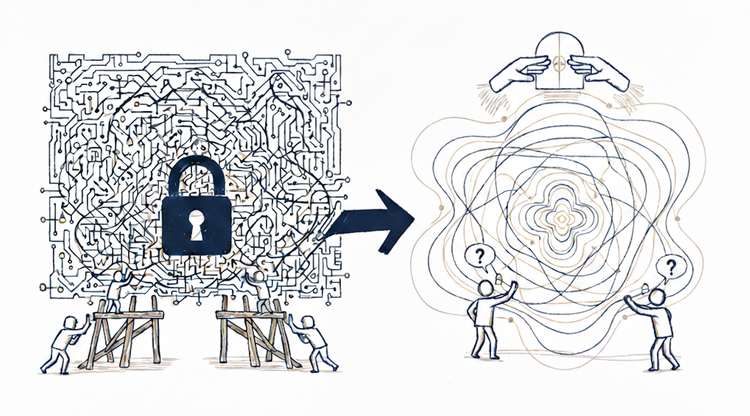
Assessment-Required Work that appears to be pure task execution but requires humans and coordination. Customer support looks straightforward until legacy contracts appear. Subscription upgrades seem routine until promotional pricing interacts with enterprise agreements. Content moderation looks like rule application until context matters more than rules. Requires human judgment and capabilities that naturally absorb coordination burden. With AI, judgment must be encoded and coordination managed through explicit infrastructure.
The type determines the approach.
Deploy traditional automation for Automation-Ready Work - cheaper, simpler, more reliable.
Use AI to assist Assistance-Ready Work - informing decisions, surfacing patterns, generating options. Keep human ownership of outcomes.
Assess Assessment-Required Work before deploying AI. This is where real placement risk lives. Demos show task execution, not the human judgment and coordination need. Most placement failures happen here - misreading work type or choosing the wrong approach.
Assessment-Required Work requires deeper evaluation. Three forces strongly indicate whether managing its requirements stays viable.
The Three Forces
Some Assessment-Required placements stay manageable. Others compound until burden exceeds value. The difference is predictable from three structural forces.