The First AI Specification Is Intention
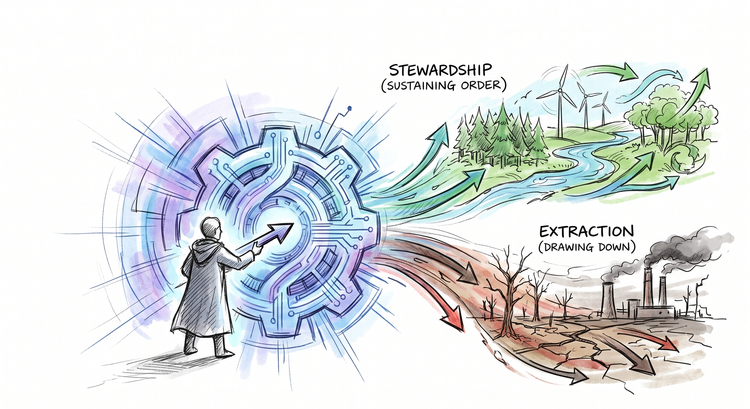
Every AI deployment starts with a purpose on a slide. That's the tongue talking. The purpose that decides what the deployment becomes is written somewhere else, in what the organization rewards. To change it, you don't rewrite the slide - you change what gets rewarded.
The Instrument AI Alignment Doesn't Have
Every control in the AI stack assumes whoever runs it is pointed at the right thing. A 900-year-old text explains why that assumption fails even in diligent, well-governed teams, and how to check it before deployment.
AI Amplifies Orientation It Cannot Hold
AI has become extraordinary at making things happen - and has no source of what to make happen. It amplifies the orientation it's given, at the scale of its full capability, and holds none of its own. So the alignment problem was never really about the machine. It's about the hand on it.
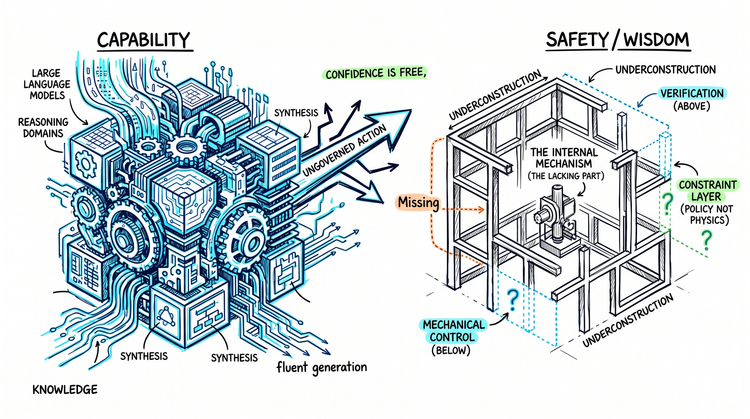
AI Has Intelligence, Not Wisdom
AI doesn't fail despite its capability. It fails because capability has outpaced the capacity to govern its own application. We scaled knowledge. We never built what governs it.
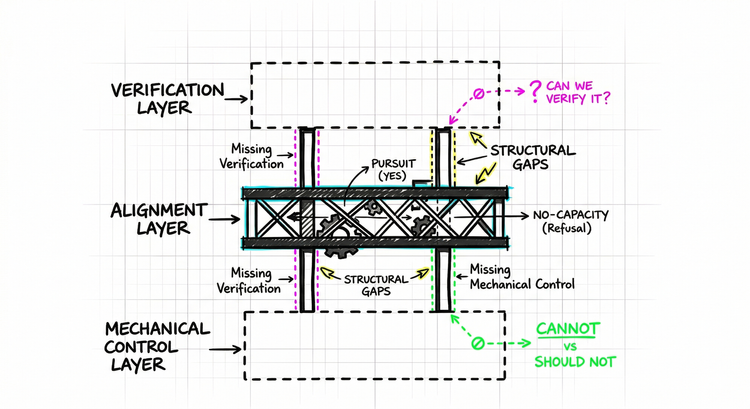
The AI Safety Sequencing Problem
Alignment is the third question. AI safety is being built between two missing foundations.
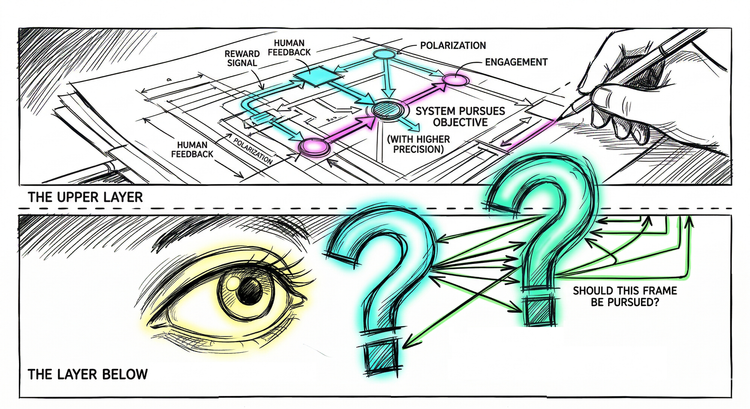
The Specification Ceiling: The Layer AI Cannot Reach
The AI safety field agrees on almost nothing - except this: we build systems to pursue objectives we set, and we set them badly. That consensus produced real solutions. It also closed off a prior question nobody decided to close.